Life in Brice
If you are on a mobile device, this version of the website will be better for you.
This is an exploration of the history of Brice, Lakeview, Clarendon, and Memphis in the years between 1935-1960. My Dad, great-grandparents and grandparents, aunts and uncles were raised there. I am interested in the history of the towns and how they were inter-dependent.
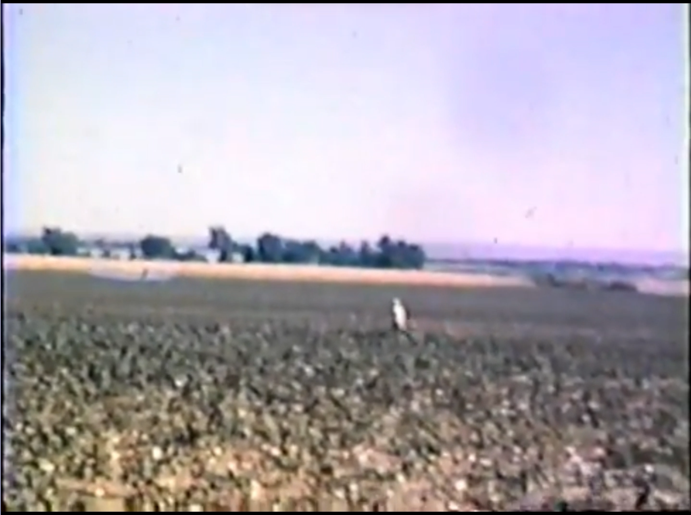
It also explores the timing and conditions under which irrigation was introduced to the farmland of this area, and the impact irrigation had. Before irrigation, my grandparents and their neighbors were dryland farmers, and were at the mercy of the weather. After irrigation, my father, his parents and siblings would have to “move the pipe” every morning and evening to move the sprinklers to the next swath of coverage.
Also, parts of this will explore an area of the panhandle of Texas that was once known as Antelope Flat. It is just south of the Prairie Dog Fork of the Red River. My forefathers, grandparents, and my Dad once lived there.
I often say that “we stand on the backs of the giants who came before us”. Then I question “how do we want to live into that as a future?” We’re not standing on their backs —we’re standing in their posture. That posture showed up as how they showed up for neighbors, how they absorbed risk, how they shared burden, and how they accepted limits without surrender. Those are not abstract virtues. They are embodied choices,
The giants we speak of weren’t towering because they dominated.
They were giants because they carried weight together — and left behind footholds instead of monuments.
“How do we want to live into that as a future?” That question is not answered by better technology, higher resolution, or faster systems. It is answered by where we place trust, how we distribute responsibility, and whether we leave room for human anchors. Progress isn’t about removing humans from the system. It’s about keeping humans visible within it.
The underlying intent of this website is to explore how everything is an expression of interconnectedness. This is an exploration of the interdependence of these towns at that time. Interconnectedness is not only a physical or social fact but a spiritual insight. It reveals that separateness is an illusion sustained by limited perception. In this sense, interconnectedness is not merely an idea; it is the living geometry of existence itself; a reminder that every part contains the whole, and the whole depends on every part.
Next dirt roads to travel:
The eastern Texas Panhandle didn’t support isolated self-sufficiency. Distances were long. Population was thin. Each town specialized — not by planning, but by necessity.
The Commerce of Brice and Surrounding Area
Antelope Flat functioned as a micro-community, even if it never incorporated or left much of a paper trail. It is what historians often call a service node rather than a town
Antelope Flat
The plants and animals around Brice are a very specific ecological mix — here are a few a few details about each plant and animal of the area.
The Plants of Brice The Animals of Brice